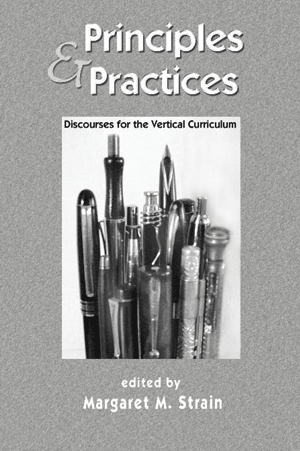
Principles and Practices: Discourses for the Vertical Curriculum | |
|  | Quantity in Basket:none
Code: 978-1-61289-091-3
Price:$31.95
Title: Principles and Practices
Sub-title: Discourses for the Vertical Curriculum
Editor(s): Margaret M. Strain
Publish Date: October 2012
Pages: 304
Format: Paper
| |
| This book addresses the field’s growing attention to the multiple locations for advanced writing instruction. A helpful term for mapping this new terrain is that of the “vertical curriculum,” and the 14 essays presented here reflect the various ways instructors have come to understand the role of advanced writing for the undergraduate and graduate student, those teaching across disciplines, and for those working inside the academy and beyond it. At the same time, these essays invite the reader to consider the forums, technologies, and genres in which we compose and publish advanced writing, and the dialectical relationship between theory and praxis.
The arc of the chapters illustrates how advanced writing has been re-envisioned in exciting ways, ultimately arguing that what is means to teach advanced writing is best understood in terms of the exigencies and material conditions of local student populations, writing programs, and institutional missions. Designed for instructors, writing program administrators, and students in rhetoric and composition, this book makes a case for the teaching of writing wherever we find ourselves in the vertical curriculum.
Contents: Introduction, Margaret M. Strain. THEORETICAL FOUNDATIONS FOR ADVANCED WRITING. The Role of Advanced Composition in the Undergraduate Curriculum: Making a Place for Rhetorical Thinking, Joanne Addison. Kairos and Stasis Revisited: Heuristics for the Critically Informed Composition Classroom, Helen Foster. Imagining Reasons: The Role of the Imagination in Argumentation, Patricia Roberts-Miller and Ginny Pompei Jones. The Experiential Ethos of Advanced Composition, Judy Halden-Sullivan. How Does Technology Fit into the Vertical Writing Curriculum?, Kate Kiefer. How Long Should it Be? Helping Advanced Composition Students Become Independent Writers, William J. Macauley, Jr., and Gian S. Pagnucci. Teaching and Learning Workplace Literacies in the Advanced Composition Course, Nancy Morrow. Inventive Revision and Advanced Writing: Reflection in Life and the Classroom, Luisa Rodriguez Connal and Roberta Binkley. The Invisible Contact Zone of Business Communication, William W. Wright. EXTENDING THE VERTICAL CURRICULUM. Writing in the Service of the Polis: Teaching “Real-World” Genres in Advanced Writing, Kristine Hansen. Producing the Humanities: A Multimodal Collaboration, Betty Youngkin and Dwight Matlock. Out of Now/Here: A Multiwriting Exhibition, Robert Davis and Mark Shadle. On Stage(s): Poetics, Performance, and Graduate Student Professionalization, Margaret M. Strain (with Performances by Tanya Firestone, Nick Obis, Robyn Reed, and Brennan Thomas). Creating Opportunities for Student Publishing: Three Venues, Lynée Lewis Gaillet. Author Index. Subject Index. |
| |